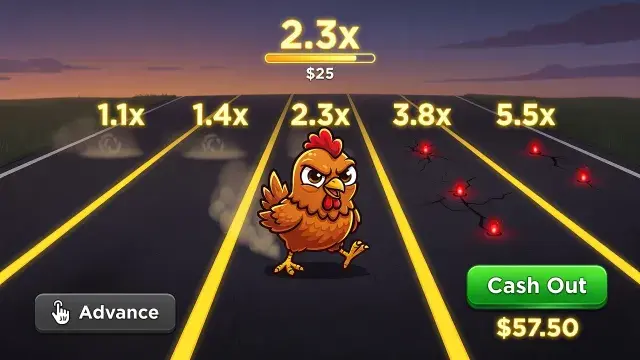
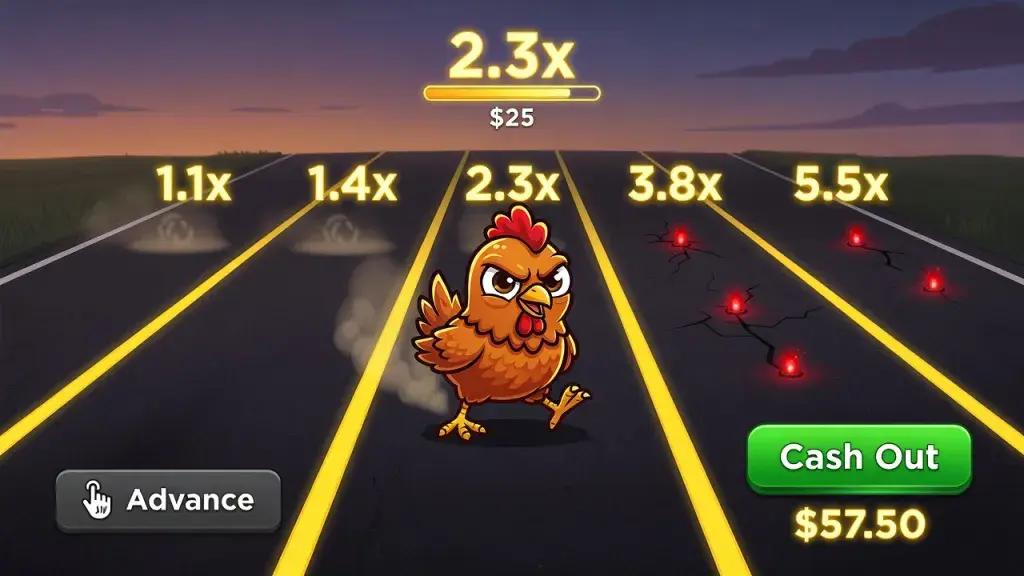
A single wrong tap on a moving lane can end a round in less than a second, yet the same game rewards patient players with steadily climbing multipliers if they read the pattern correctly. That contradiction sits at the heart of Chicken Road, a game that looks simple on the surface but punishes careless play almost immediately. Anyone who has watched a multiplier climb from 1.2x to 4x, only to lose it all on a hasty decision, understands why a proper approach matters more than luck.
This guide breaks down the mechanics, the risk curve, and the decision-making process that separates consistent players from those who burn through their balance in minutes. Before jumping into the finer points of timing and bankroll control, it helps to walk through a clear explanation of the basics - for readers who want a structured breakdown, chicken road game kaise khele covers the step-by-step setup in a way that complements the strategic angle taken here. From there, the focus shifts to what actually happens once the round begins and how to respond to it.
What follows is a practical breakdown built for players who already understand the concept of crash-style or lane-based betting games but want a sharper edge. Expect concrete advice on controls, risk tiers, common mistakes, and the mental discipline required to walk away with winnings instead of regrets.
Understanding the Basics: How to Play Chicken Road Game
Chicken Road belongs to a family of games built around escalating risk and escalating reward. A chicken - the player's avatar - moves forward across a road divided into lanes, and each lane crossed safely increases the payout multiplier. The catch is straightforward: any lane can end the run, and the player never knows in advance which one carries the risk. Learning how to play chicken road game well starts with accepting that unpredictability is the entire design, not a flaw to work around.
The Core Objective
The goal is to advance as many lanes as possible before choosing to cash out. Each successful crossing raises the multiplier attached to the initial stake. Stopping early locks in a smaller but guaranteed win. Pushing further increases potential payout while raising the chance of losing everything wagered on that round.
Setting Up a Round
Before the chicken moves, the player sets a stake amount. This figure determines the base value multiplied by each successful lane crossing. Most versions allow stake adjustment between rounds but lock it once the round starts, so deciding on bet size beforehand is part of sound preparation rather than an afterthought.
Reading the Multiplier Ladder
The multiplier ladder typically starts low and accelerates as the chicken advances. Early lanes offer modest increases, while later lanes offer sharper jumps paired with sharper risk. Recognizing where the ladder shifts from gradual to aggressive is one of the first analytical skills a new player needs to build.
Chicken Road Game Controls and Rules
Mechanically, the game rewards simplicity. There is no complex input scheme, no combination of keys, and no hidden menu system to master. That simplicity, though, means every decision carries weight, since there's no technical skill to fall back on - only judgment.
Basic Input Mechanics
Players typically interact through two actions: advance the chicken to the next lane, or cash out the current multiplier. On most platforms this is a single tap or click, sometimes supported by a slider or button showing the current potential payout. Understanding chicken road game controls and rules means recognizing that the interface is intentionally minimal - the complexity lives in timing and judgment, not in mechanical execution.
Round Termination Conditions
A round ends in one of two ways: the player cashes out voluntarily, or the chicken fails to cross a lane and the round terminates automatically, forfeiting the stake. There is no partial recovery once a round fails - the entire wagered amount for that round is lost.
Platform Variations
Different platforms may adjust visual themes, sound design, or the exact pacing of multiplier growth, but the underlying rule set stays consistent. Some versions add optional side bets or bonus lanes, though these should be treated as secondary features rather than core strategy elements.
- Single input for advancing or cashing out
- Stake locked once the round begins
- Round ends immediately on failure, with no partial refund
- Multiplier growth accelerates as lanes increase
Chicken Road Game Strategy: Building a Repeatable Approach
Strategy in this context isn't about predicting outcomes - the lane risk is randomized and can't be reverse-engineered. Real chicken road game strategy is about managing exposure, setting exit points, and controlling emotional decision-making under pressure.
Defining a Personal Risk Tolerance
Some players prefer frequent small wins with lower multipliers; others chase larger multipliers with fewer successful rounds. Neither approach is objectively correct. The important step is deciding in advance which category fits a given session, rather than adjusting risk appetite mid-round based on emotion.
Setting Cash-Out Thresholds
A disciplined player picks a target multiplier before the round starts and sticks to it. This removes the temptation to "just cross one more lane" after a string of successes - a pattern that accounts for a large share of avoidable losses.
Bankroll Segmentation
Dividing a total budget into fixed session amounts prevents a single bad streak from wiping out funds meant for multiple sessions. A common approach is capping any single round's stake at a small fraction of the total bankroll, keeping the impact of any one failure limited.
Chicken Road Game Tips and Tricks for Consistent Play
Beyond structural strategy, certain habits separate players who last through many sessions from those who lose their stake quickly. These chicken road game tips and tricks focus on discipline rather than shortcuts, since no technical exploit changes the underlying randomization.
Avoiding the Sunk-Cost Trap
After a loss, the instinct to immediately increase the next stake to "win it back" is one of the most damaging patterns in this type of game. Treating each round as an independent event, disconnected from previous outcomes, keeps decisions rational.
Recognizing Pattern Illusions
Because the game presents a visual sequence of lanes, it's tempting to believe a pattern exists in how failures occur. No such pattern exists in a properly randomized system. Players who internalize this avoid wasting effort trying to "read" the road.
Timing Sessions for Focus
Fatigue leads to impulsive taps and delayed cash-out decisions. Shorter, focused sessions consistently produce better decision-making than long stretches of continuous play.
Chicken Road Game Gameplay Guide: A Walkthrough Example
Walking through a hypothetical round clarifies how the pieces fit together in practice, translating rules and strategy into a sequence of real decisions.
Round Start and Initial Lanes
The player sets a stake, the chicken begins moving, and the first few lanes offer small multiplier increases - perhaps moving from 1.1x to 1.4x. These early stages carry lower risk relative to reward, making them a reasonable zone for cautious players to build confidence.
Mid-Round Decision Point
As the multiplier approaches a moderate threshold, the risk-reward balance shifts noticeably. This is typically where a predetermined cash-out threshold comes into play, and where players following a chicken road game strategy built around discipline will exit, even if the ladder appears to invite further progress.
Late-Round Risk Escalation
Players who push into later lanes chase substantially higher multipliers but face proportionally higher failure risk. This stage suits only those operating within a bankroll segment specifically allocated for higher-variance attempts.
Common Mistakes That Undermine Good Strategy
Even players who understand the rules well can fall into predictable traps that erode their results over time.
Chasing Losses Without a Reset Point
Continuing to play immediately after a loss, without a defined stopping rule, tends to compound bad decisions rather than correct them.
Ignoring Predefined Exit Multipliers
Abandoning a planned cash-out point in the heat of the moment defeats the entire purpose of setting one in the first place.
Overestimating Skill in a Randomized System
No amount of practice changes the underlying probability of any given lane. Confusing familiarity with the interface for actual predictive skill leads to overconfident, oversized bets.
Frequently Asked Questions
Is there a way to predict which lane will fail?
No. The lane outcomes are randomized, and no visual cue or pattern reliably indicates which lane carries risk. Any perceived pattern is coincidental rather than predictive.
What stake size is considered reasonable for a beginner?
A small fraction of the total session bankroll, often no more than a few percent per round, keeps losses manageable while still allowing enough rounds to understand the game's rhythm.
Should I always cash out at the same multiplier?
Using a consistent threshold as a baseline is sound practice, though some players adjust it slightly based on bankroll size for that session. The key is deciding the threshold before the round starts, not during it.
Can side bets or bonus lanes improve my odds?
These features typically add variety rather than a genuine mathematical edge. Treat them as optional entertainment, not a core part of a serious strategy.
How do I recover after a losing streak?
Stop the session, reassess the remaining bankroll, and return only with a fresh, smaller stake plan. Increasing bets to recover losses quickly tends to deepen them instead.
Is the game fundamentally different from other crash-style games?
The visual theme and lane-based progression differ, but the underlying risk-reward mechanic mirrors other escalating-multiplier formats. Skills in bankroll management and disciplined exits transfer directly between them.