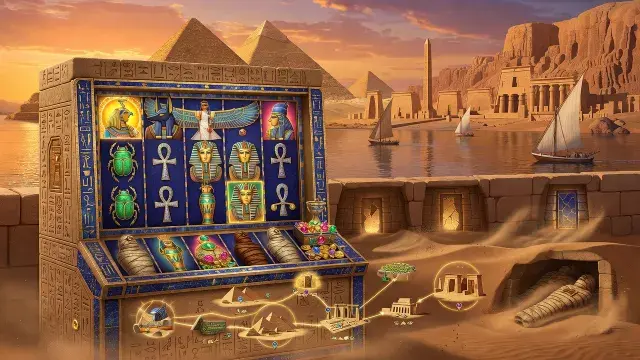
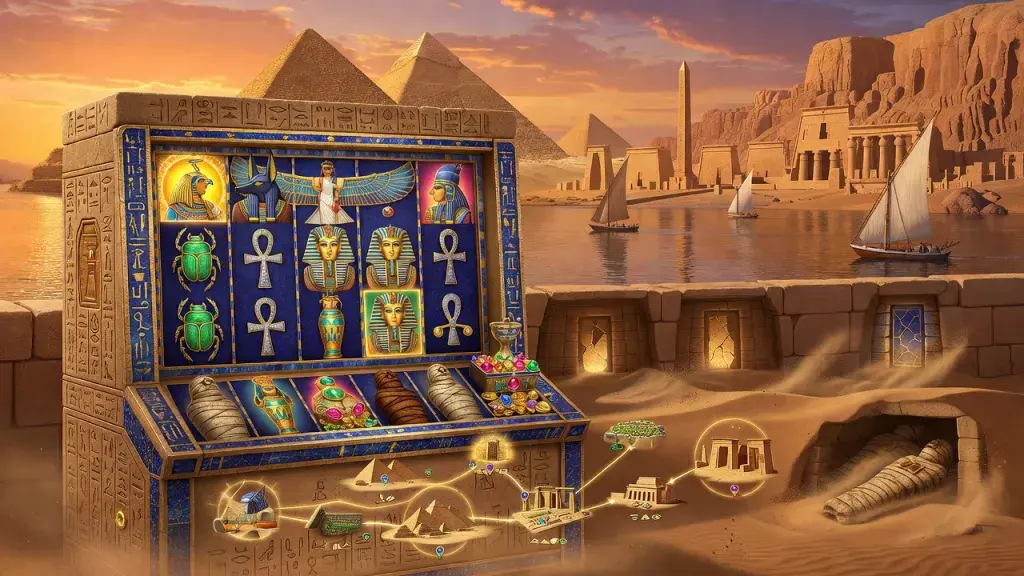
A slot machine set along the Nile can hold more historical texture than a museum brochure. Developers researching ancient Egypt rtp mechanics often draw from actual burial practices, temple hierarchies, and funerary texts, translating them into symbols and bonus rounds. The result is a genre of games that rewards players not just financially but intellectually, since recognizing a scarab, an ankh, or a canopic jar carries meaning beyond decoration.
This fascination did not start with gaming. Egyptology as a discipline has captivated scholars and casual enthusiasts for two centuries, ever since tomb excavations revealed gold masks, painted sarcophagi, and hieroglyphic inscriptions describing gods few outsiders had heard of before. That same curiosity now drives demand for egyptian mythology rtp titles, where players want more than spinning reels - they want a narrative thread connecting Anubis, Ra, and Isis to the paytable in front of them. For readers who want to see how one modern title translates these themes into gameplay, the legacy of egypt rtp offers a useful reference point, blending temple architecture with reward structures that mirror ancient concepts of balance and judgment. Understanding this crossover between mythology and mechanics is the first step toward appreciating why these games persist as a durable category.
What follows is a breakdown of how ancient Egyptian themes translate into game design, what separates a well-researched title from a superficial one, and how elements like pharaoh riches, mummies, and treasure hunts function as both entertainment and, in a limited sense, informal history lessons.
Ancient Egypt RTP: What the Term Actually Means
RTP as a Mathematical Concept
Return to Player, or RTP, describes the theoretical percentage of wagered money a slot returns to players over a large number of spins. An ancient Egypt rtp title with a 96% rate, for instance, is calculated to return 96 units for every 100 wagered across millions of rounds - not within a single session. This distinction matters because players frequently conflate RTP with short-term luck, when it actually describes long-term statistical behavior built into the game's algorithm.
Why Egyptian Themes Dominate This Genre
Egypt offers a visual and narrative vocabulary that few other historical periods match: pyramids, pharaohs, gods with animal heads, gold burial masks, and a writing system that still looks mysterious to modern eyes. Game designers exploit this recognizability because players already carry cultural associations with the imagery before they place a single bet. This pre-existing familiarity shortens the learning curve for new titles and explains why Egyptian-themed slots remain a constant presence in casino libraries rather than a passing trend.
How RTP Interacts With Volatility
RTP alone does not describe how a game feels to play. Volatility - how often and how large payouts occur - works alongside RTP to shape the experience. A historic Egyptian adventure rtp title might carry a modest RTP but high volatility, meaning long dry spells punctuated by substantial wins, or the reverse: frequent small payouts with lower peaks. Reading both figures together gives a far more accurate picture than RTP alone.
- RTP reflects long-term average return, not individual session outcomes
- Volatility determines payout frequency and size distribution
- Both figures should be published transparently by legitimate developers
Egyptian Mythology as a Game Design Framework
The Core Pantheon in Slot Symbolism
Egyptian mythology rtp games typically draw from a recognizable cast: Ra, the sun god; Anubis, guardian of the afterlife; Isis, associated with magic and protection; and Horus, often depicted as a falcon. These figures are not arbitrary - each carries specific narrative weight that developers use to justify bonus mechanics. Anubis frequently triggers free spins tied to the underworld theme, while Ra's imagery often anchors the highest-paying symbol, reflecting his supreme status in the original pantheon.
The Book of the Dead and Narrative Structure
Many titles borrow structurally from the Book of the Dead, the funerary text meant to guide souls through the afterlife's trials. This gives designers a built-in story arc: players "journey" through symbols representing judgment, reward, and passage, which adds coherence to what would otherwise be a random sequence of spins. The narrative scaffolding turns a mechanical process into something resembling a guided expedition.
Common Missteps in Mythological Accuracy
Not every title respects the source material. Some conflate deities from different eras of Egyptian history spanning nearly three thousand years, presenting Old Kingdom and Ptolemaic-period imagery side by side as if they were contemporaneous. Players with a genuine interest in the culture will notice these inconsistencies, and developers who invest in historical consultation tend to produce more credible, longer-lasting titles as a result.
Pharaoh Riches RTP: The Wealth and Power Angle
Why Pharaohs Symbolize Maximum Reward
Pharaohs occupied a position unlike any modern head of state - considered living gods, intermediaries between the divine and mortal world, and sole owners of the nation's resources. This absolute authority makes them the natural symbol for jackpot tiers in pharaoh riches rtp games, where the pharaoh icon almost always represents the top payout, sometimes triggering multipliers unavailable to lesser symbols.
Gold, Regalia, and Visual Cues of Wealth
Design teams lean heavily on artifacts associated with royal burial - gold death masks, lapis lazuli inlays, ceremonial crooks and flails - because these objects communicate wealth instantly, without requiring textual explanation. The visual shorthand works across languages and cultures, which partly explains the international popularity of this genre.
Bonus Rounds Built Around Royal Hierarchy
Several pharaoh riches rtp titles structure their bonus rounds as a form of court ascension, where players unlock tiers moving from commoner to noble to royal status, each level increasing multipliers. This layered progression mirrors the rigid social stratification of ancient Egyptian society, giving the mechanic a subtle but genuine historical grounding rather than arbitrary escalation.
Mummies and Treasures RTP: Exploration and Discovery Mechanics
The Appeal of Tomb-Raiding Narratives
Mummies and treasures rtp games tap into a well-established cultural fascination with tomb discovery, largely inherited from the widely publicized excavation of royal burial sites in the early twentieth century. Sealed chambers, hidden sarcophagi, and cursed artifacts provide ready-made suspense that translates directly into bonus round tension - will the reel reveal treasure or trigger a penalty symbol?
Mummification as a Mechanic, Not Just a Theme
Some titles incorporate the actual process of mummification into gameplay, unlocking stages such as embalming, wrapping, and burial as players progress through free spin rounds. This turns an ancient ritual practice into an interactive structure, which works because the original process itself was sequential and highly codified, lending itself naturally to game-stage design.
Treasure Chambers and Multiplier Chains
Hidden chamber mechanics - where players select from unmarked doors or canopic jars to reveal prizes - remain a staple because they replicate the psychological thrill of archaeological discovery. Multiplier chains attached to these reveals increase tension incrementally, rewarding patience over impulsive play.
- Sealed chamber bonus rounds simulate the discovery process
- Canopic jars and sarcophagi commonly serve as bonus trigger symbols
- Curse or penalty symbols add risk balancing the treasure reward structure
Historic Egyptian Adventure RTP: Combining Story and Gameplay
Adventure Framing Versus Static Symbol Design
A historic Egyptian adventure rtp title distinguishes itself by framing the entire game as an expedition rather than a static grid of symbols. Players might "travel" across a map of ancient sites - Giza, Luxor, the Valley of the Kings - with each location unlocking a distinct bonus feature tied to its real historical significance.
Environmental Storytelling Through Sound and Art
Sound design plays a larger role than many players realize. Wind across desert dunes, distant chanting, the scrape of stone doors - these audio cues reinforce the adventure framing far more effectively than visuals alone. Combined with painterly backgrounds depicting temple ruins or riverbanks, the sensory layering makes an otherwise mechanical spin cycle feel like part of a larger expedition.
Progression Systems Modeled on Exploration
Many adventure-framed titles use progression bars or maps that fill in as players unlock features, mimicking the process of charting unexplored territory. This gives sessions a sense of forward momentum absent from traditional slot formats, where each spin exists in isolation.
Choosing and Evaluating an Egyptian-Themed Slot
Reading Published RTP and Volatility Figures
Reputable developers publish RTP figures directly within the game's information panel. Players should treat any title withholding this figure with suspicion, since transparency here is now standard practice across licensed platforms.
Assessing Historical and Mythological Authenticity
Titles that clearly differentiate between historical periods, correctly attribute deities to their traditional roles, and avoid generic "desert theme" clichés tend to reflect a higher production standard. This authenticity often correlates with more thoughtful bonus design overall.
Matching Volatility to Personal Play Style
Players seeking frequent, smaller wins should favor lower-volatility ancient Egypt rtp titles, while those chasing larger, rarer payouts should accept longer stretches without reward. Neither approach is objectively better - the choice depends entirely on individual risk tolerance and session length preferences.
Frequently Asked Questions
What is considered a good RTP for an Egyptian-themed slot?
Most licensed titles fall between 94% and 97%, with anything above 96% generally regarded as favorable to players. Figures below 94% are less common among reputable developers and warrant closer scrutiny before playing.
Does high volatility mean higher RTP?
No, the two figures are independent of each other. A game can carry high volatility with a modest RTP, or low volatility with a strong RTP - always check both figures rather than assuming one predicts the other.
Are the gods depicted in these games historically accurate?
Accuracy varies significantly by developer. Some titles research specific dynastic periods carefully, while others blend deities and symbols from different eras purely for visual appeal, so treat in-game mythology as entertainment rather than a historical reference.
Why do pharaoh symbols usually pay the most?
Pharaohs represented the highest social and religious authority in ancient Egyptian society, making them a natural fit for top-tier payout symbols. This design choice reflects historical hierarchy rather than arbitrary symbol ranking.
Can bonus rounds actually teach real history?
To a limited extent, yes. Well-researched titles incorporate accurate details about mummification stages, burial customs, or temple layouts, giving players incidental exposure to real practices, though this should never replace formal historical sources.
What separates an adventure-style Egyptian slot from a standard one?
Adventure-framed titles build a sense of progression through maps, unlockable locations, or narrative stages, while standard titles rely purely on symbol combinations without an overarching journey structure.