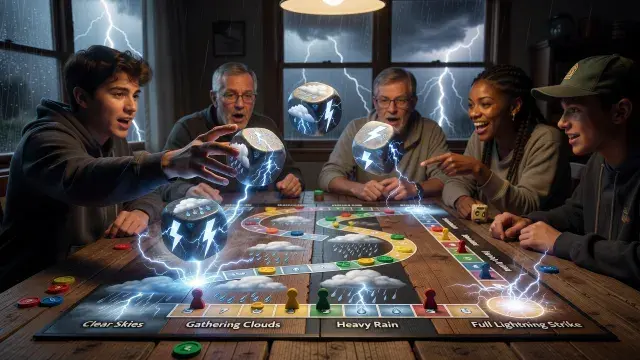
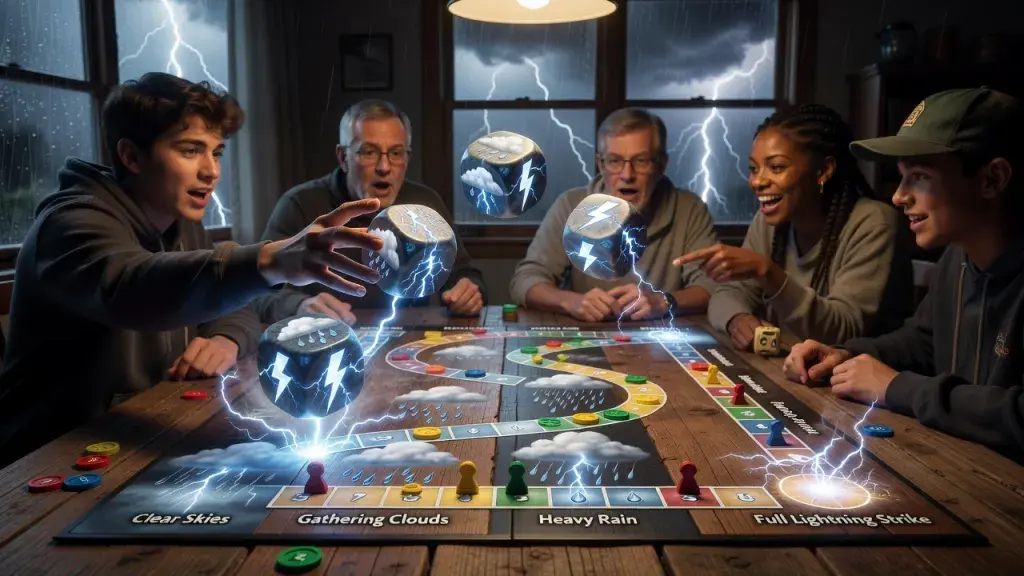
A single die can hold six outcomes, but a well-built dice game can hold hundreds of decisions, gambles, and near-misses in a single sitting. That's the appeal of a storm-themed dice game built around the idea of lightning: unpredictable, sudden, and impossible to ignore once it strikes. Players who enjoy fast-paced tabletop mechanics tend to gravitate toward games that mimic natural chaos, and few things capture chaos better than a thunderstorm rolling across a game board.
The lightning dice game format has grown into its own niche among tabletop and digital hybrid entertainment, borrowing the visual drama of storms and translating it into risk-and-reward dice mechanics. For readers who want to try the concept firsthand rather than just read about it, the lightning dice game offers a live example of how storm-based rolling systems function in practice. Understanding the rules before jumping in makes the difference between a confusing first round and a confident, strategic session.
This guide breaks down the mechanics, strategy, and appeal of thunder dice rolling from the ground up. Whether you're setting up a physical tabletop session with friends or exploring a digital version, the core logic remains consistent, and knowing it in advance will save you from costly early mistakes.
What Makes a Storm-Themed Dice Game Different
Most dice games rely on straightforward number matching or accumulation. A storm-themed dice game adds a layer of thematic tension by tying dice outcomes to escalating weather events - calm skies represent low risk, while a full lightning strike represents a high-stakes climax. This structure isn't decorative. It changes how players approach each roll, because the "storm" acts as both a scoring multiplier and a narrative device.
The Role of Weather Symbolism in Gameplay
Weather symbols on the dice aren't random flourishes. Clouds might signal a building multiplier, rain might trigger minor point gains, and a lightning bolt typically represents the maximum payout or the riskiest gamble. This symbolism gives players an intuitive way to gauge risk without memorizing complex rule charts.
Why Thunder and Lightning Themes Work So Well in Tabletop Design
Thunder and lightning carry an inherent unpredictability that mirrors dice probability itself. Designers use this parallel deliberately - the randomness of a storm feels like a natural metaphor for the randomness of a die roll, which makes the theme immediately intuitive even for first-time players.
Comparing Storm-Themed Mechanics to Traditional Dice Games
Traditional dice games like Yahtzee or Farkle focus on numerical combinations. A lightning strike tabletop game instead layers in escalating risk tiers, where each round pushes players closer to a "strike" moment that can multiply winnings or wipe out accumulated points entirely.
- Traditional games: fixed scoring based on number combinations
- Storm-themed games: escalating risk tied to thematic weather stages
- Traditional games: minimal narrative tension between rolls
- Storm-themed games: building suspense as the "storm" intensifies
Core Rules of the Lightning Dice Game
Before playing any electrifying dice adventure, it helps to understand the baseline rule set. While specific versions vary between physical tabletop editions and digital adaptations, the fundamental logic stays consistent across most implementations.
Setting Up the Board and Dice
Most versions use a themed board divided into storm stages - clear skies, gathering clouds, heavy rain, and full lightning strike. Players place tokens or markers at the starting "clear skies" zone before the first roll.
Understanding Turn Order and Rolling Sequence
Turns typically move clockwise, with each player rolling a set number of dice per turn. The outcome determines whether a player's token advances toward the storm's peak or retreats due to a failed roll.
Scoring Zones and Multiplier Stages
Points scale with proximity to the storm's climax. A roll landing in the "gathering clouds" zone might yield modest points, while a roll that triggers thunder dice rolling in the final stage can multiply the entire round's score, assuming the player doesn't overextend and risk losing it all.
How to Play Step-by-Step
Learning by sequence is often easier than memorizing abstract rules. Below is a practical walkthrough for a typical round.
Step 1: Rolling for Storm Position
Each player rolls to determine their starting position on the storm track. Higher rolls place a player closer to the lightning zone immediately, while lower rolls start them in the calmer sections of the board.
Step 2: Choosing to Push or Hold
This is the strategic core of the game. Players decide whether to roll again and advance further into the storm - risking a bust - or hold their current position and bank their points.
Step 3: Triggering a Lightning Strike Event
When a specific combination appears (commonly matching bolt symbols across multiple dice), a lightning strike event triggers. This can multiply the current round's score significantly, but a failed attempt at this stage often costs the player their entire round total.
Step 4: Resolving Round Scores
Once all players have either banked their points or busted, scores are tallied. The game usually continues across several rounds until a target score is reached or a fixed number of rounds have been played.
Strategy Tips for Mastering Thunder Dice Rolling
Success in this genre isn't purely about luck. Reading probability, timing risk, and managing round-by-round decisions all separate consistent winners from players who bust out early.
Reading the Odds Before Pushing Further
Every additional roll into the storm increases both potential reward and potential loss. Skilled players track how many "safe" symbols remain in play versus how many "strike" symbols could end their round, adjusting their decisions accordingly.
Managing Risk Across Multiple Rounds
A single bad round rarely determines the outcome of an entire game. Players who consistently bank moderate scores instead of chasing maximum multipliers every round tend to outperform those who gamble aggressively on every turn.
Common Mistakes New Players Make
New players frequently overextend during the middle rounds, pushing for a lightning strike when a modest, banked score would have kept them competitive. Overconfidence after an early win is another frequent cause of collapse later in the game.
- Pushing too far into the storm zone without tracking remaining safe outcomes
- Ignoring opponents' scores when deciding whether to hold or roll again
- Treating every round the same instead of adjusting strategy based on current standings
Why Players Are Drawn to the Electrifying Dice Adventure Format
The appeal of storm-based dice mechanics goes beyond visual theming. The escalating tension built into each round taps into the same psychological hooks that make push-your-luck games broadly popular across the tabletop industry.
The Psychology of Risk and Reward in Dice Games
Each roll carries a binary outcome - progress or collapse - which keeps players engaged in a way that slower, more deterministic games often can't replicate. The uncertainty of thunder dice rolling creates a tension curve that peaks right before the lightning strike moment.
Social and Competitive Appeal Around the Table
Group play amplifies the tension. Watching another player push their luck toward a strike zone, and either celebrate a huge multiplier or lose everything, adds a layer of shared drama that solitary games rarely achieve.
Digital Adaptations and Their Growing Popularity
Physical tabletop versions have inspired digital adaptations that replicate the same push-your-luck mechanics with added visual and audio effects - flashing lightning, rumbling thunder sound cues, and animated storm tracks that heighten the same tension found in the original tabletop format.
Variations and House Rules Worth Trying
Once the base rules feel familiar, many groups introduce variations to keep sessions fresh and to adjust the pacing of risk across longer play sessions.
Team-Based Storm Challenges
Instead of individual scoring, teams pool their storm progress, requiring coordinated decisions about when to push further and when to hold. This variant rewards communication as much as individual risk tolerance.
Timed Rounds for Faster Play
Adding a timer per turn increases pressure and reduces analysis time, making decisions feel more instinctive and closer to the unpredictable nature of an actual storm.
Custom Dice Sets for Higher Stakes
Some groups introduce additional dice with rarer lightning symbols, increasing both the risk and the potential multiplier for advanced players who want a steeper challenge than the standard rule set provides.
Frequently Asked Questions
How many players can join a typical lightning dice game session?
Most versions support two to six players comfortably, though the core push-your-luck mechanic scales well even with larger groups since turns move quickly and downtime between rolls stays minimal.
Is the lightning strike tabletop game suitable for beginners?
Yes. The rules are simple to explain within a few minutes, and the visual storm-progression board makes risk levels easy to understand even for players who have never touched a push-your-luck dice game before.
What happens if a player rolls a lightning strike but has no points banked yet?
In most rule sets, triggering a strike with zero banked points simply results in no gain or loss for that round, since there's nothing yet to multiply or lose. The player then starts the next round from the base storm position.
Can this game be played digitally instead of with physical dice?
Yes, several digital adaptations replicate the same storm-track mechanics with animated dice and automated scoring, which speeds up play and removes manual tracking of round totals.
How long does an average session take?
A standard multi-round session usually runs between twenty and forty minutes, depending on player count and whether house rules like timed turns are in use.
What's the best strategy for a first-time player?
Bank points early and often rather than chasing the maximum multiplier every round. Building comfort with the risk curve over several rounds tends to produce better long-term results than gambling heavily from the start.